
Choice and Independence in Dogs: Understanding the Dog in Front of You
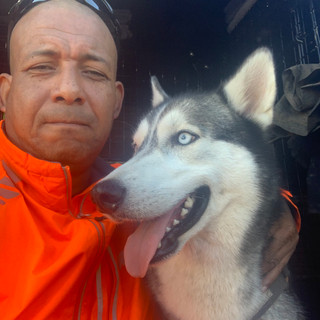
One of the most common things I hear from dog owners is:
"My dog is just stubborn."
It's an understandable conclusion when your dog refuses to walk on the lead, lies down and anchors themselves to the ground, pulls towards something more interesting, or completely ignores your recall in the park.
But here's the reality.
Your dog isn't being stubborn. They aren't trying to frustrate you, or act out of spite.
Although dogs can push back if they feel threatened or haven’t got a flight option, but again instinctively based on a reflex responses.
They're simply being a dog.
Dogs are instinctive animals. They make decisions based on genetics, emotion, motivation, past experiences, and what's happening in the environment around them. They operate through impulses that often have been shaped by years of selective breeding.
Understanding this changes everything.
Genetics Matter
Take the Spitz family of breeds.
There are around fifty Spitz-type breeds, including the Siberian Husky, Alaskan Malamute, Shiba Inu, Akita, Pomeranian and many others.
Let's look at the Siberian Husky.
Powerfully built. Exceptionally intelligent. Highly resilient.
For generations they were selectively bred to pull heavy loads across some of the harshest environments on Earth. They worked as part of a team, yet they also needed enough independence to solve problems without waiting for human instruction.
Those characteristics weren't accidents.
They were intentionally enhanced by selective breeding.
So when your Husky decides to investigate something you hadn't noticed, pauses to assess the environment before moving, or appears to question your direction, they're often displaying the very traits that made the breed so successful.
That's not disobedience.
That's genetics expressing themselves.
Every Dog is an Individual
Breed characteristics give us valuable insight, but they never tell the whole story.
Every dog has its own personality, learning history, confidence, motivation and emotional responses.
That's why effective training always starts with the dog standing in front of you not the dog you expected to have.
The more we understand the individual, the more successful our training becomes.
Choosing the Right Dog
Before bringing a dog into your home, it's worth asking some honest questions.
Does this breed suit your lifestyle?
Can you meet their physical and mental needs?
Do you have the time to provide the enrichment, structure and training they deserve?

Thankfully, more people are researching breeds before making that commitment. That's fantastic news for dogs and owners alike. Better-informed decisions help reduce frustration, failed relationships, and ultimately the number of dogs surrendered to rescue centres or abandoned.
Choosing the right dog is the first step.
Understanding how to train that dog is the next.
Training Isn't About Control
At Sirius7 K9 Training, we don't believe training is about domination or forcing compliance.
It's about communication.
It's about understanding.
It's about building trust.
Training provides dogs with clarity, confidence and purpose. It teaches them how to navigate the human world safely while allowing them to express natural behaviours in appropriate ways.
We focus on helping owners understand why behaviours happen, how dogs learn, and how to apply practical training techniques that produce lasting results.
Training isn't a quick fix.
It's an ongoing education and an investment in your relationship.
Building a Partnership
The strongest relationships are built on cooperation rather than control.
Dogs that choose to work with us because they understand us, trust us and find value in doing so become confident, engaged partners.
A relationship built through willingness will always be stronger than one built through force.
As the saying goes:

"The heart of a volunteer is far more powerful than that of a conscript."
The same is true in dog training.
Our goal isn't simply to teach dogs behaviours.
Our goal is to build relationships where dogs and humans understand one another, communicate clearly, and navigate life together safely and confidently.
Because that's what great dog training really is.
A relationship.
A conversation.
A shared sense of purpose.


Comments